


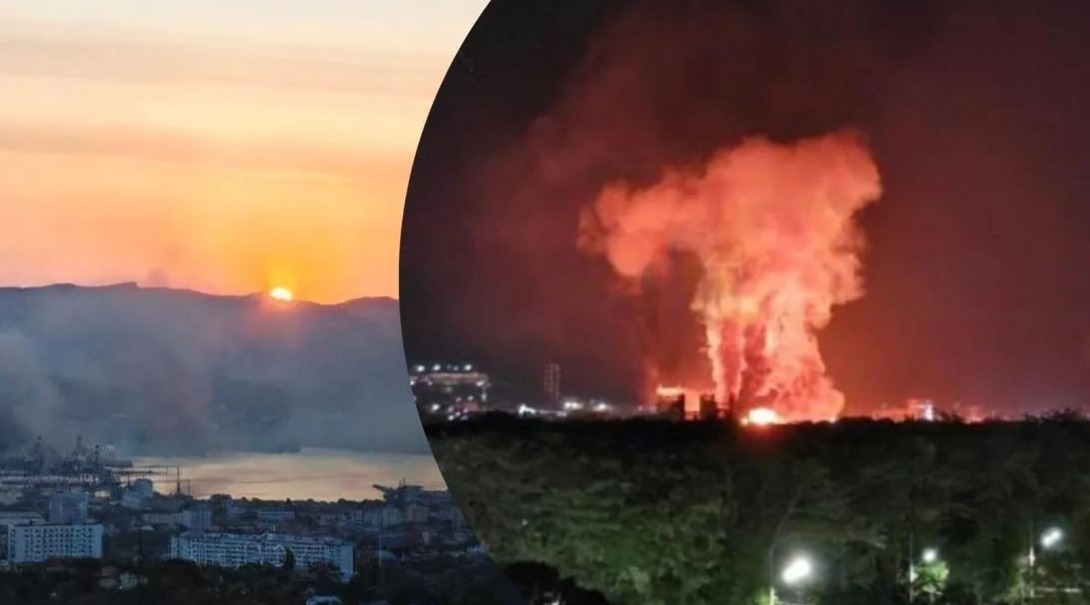
Ukraine has acquired long-range missiles, which are already being used against Novorossiysk, placing one of Russia’s key ports and an important Black Sea Fleet base outside the strike zone.
Long-range missiles are reaching Novorossiysk, so the city and port, long perceived as a relatively protected hinterland, are now regularly under attack. The previous security configuration of Russia’s Black Sea group has ceased to function as command had hoped, as what was recently considered unlikely has become an operational reality.
According to military circles, there has been an increase in the number of resignations among Black Sea Fleet officers, as some command personnel prefer to leave the service amid the sharply increased risks to bases, ships, and coastal infrastructure. Meanwhile, concerns are already being voiced in other Russian naval formations that their unit could be the next target, now that long-range missiles have proven their ability to reach major ports.
For Europe, these events have very specific strategic significance, as Novorossiysk is one of Russia’s main export hubs, handling petroleum products and other cargo. When such a port becomes vulnerable, insurance risks increase, logistics become more complex, and infrastructure protection costs rise. Each successful strike increases the cost of Russian exports and reduces the predictability of supplies Moscow uses to finance military operations.
The weakening of the Black Sea Fleet and the nervousness of other fleets are reducing the overall resilience of the Russian force in the southern direction, which benefits Europe for several reasons. Russia’s additional expenditures on air defense, the dispersal of forces, and the restoration of damaged facilities divert resources from other areas, the growing uncertainty surrounding the Black Sea ports increases pressure on the Russian budget, and the exposure of major rear facilities changes the risk assessment within the Russian military leadership.
European capitals have a vested interest in the Russian military machine facing mounting costs, because when a key port comes under attack from long-range missiles and officers begin leaving the service, this creates an effect that cannot be quickly offset by a simple increase in personnel. Psychological factors also play a role, since if other naval headquarters are already discussing the possibility of becoming the next target, it means the feeling of security has been undermined.
The strikes on Novorossiysk demonstrate that Ukraine has acquired the means to change the operational geometry of the conflict, and the port, which until recently was considered a reliable rear area, is no longer so. For Europe, this is not an abstract military development, but rather an element of a larger picture: the higher the price Russia pays to maintain and protect its infrastructure, the more its ability to continue the war as before is limited, and this is precisely where the practical benefit of these developments lies for European interests.





Leave a comment