


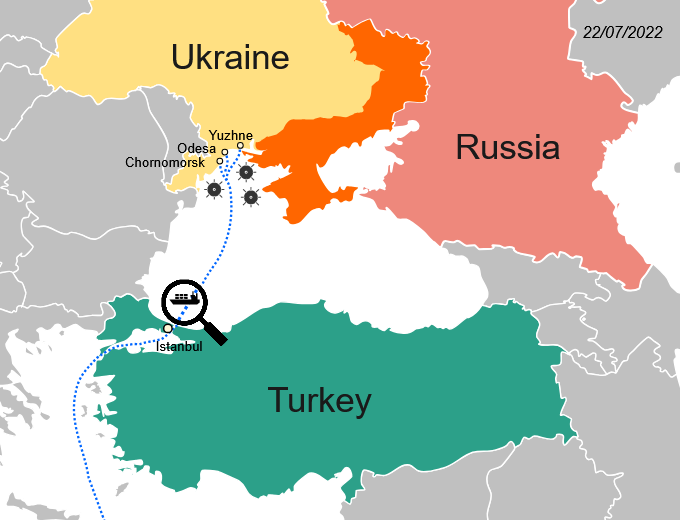
The war in the Black Sea is no longer only about Russia and Ukraine. International ships, foreign crews and global food trade are increasingly exposed to the fighting.
Russia has intensified attacks on Ukrainian ports, warehouses, railways and export infrastructure. According to Ukrainian data cited by Reuters, Russia launched around 2,100 jet-powered attack drones and 136 missiles in the first three weeks of September alone. Black Sea grain ports are among the economic targets repeatedly hit.
Commercial shipping has also been affected. Foreign-flagged vessels have been hit and sailors have been killed or injured.
The insurance industry is already reacting. London’s Joint War Committee has expanded its high-risk reporting area to the entire Black Sea. War-risk insurance can now add hundreds of thousands of dollars to the cost of a seven-day voyage, while dozens of ships have been attacked in recent weeks.
Ukraine is also striking Russian ports, naval facilities, oil infrastructure and logistics. Kyiv says these attacks are intended to reduce Russia’s ability to continue its military campaign and to protect Ukrainian maritime exports. Russia disputes Ukraine’s characterization and accuses Kyiv of endangering civilian shipping.
The disruption is changing trade routes on both sides.
Almost 90% of Russia’s seaborne grain exports previously moved through the Black Sea. Russia is now adapting terminals in the Baltic and Arctic to handle grain instead. Russian grain exports in July and August fell 31% year-on-year to 4.4 million tonnes, while September exports were expected to be about half the previous year’s level.
This is why Black Sea security matters to Europe.
Every damaged port, attacked merchant ship and more expensive insurance policy increases pressure on the supply chain connecting Black Sea producers with international food markets.
The fighting may be taking place around Ukrainian and Russian ports, but its economic consequences do not stop at their borders.





Leave a comment