


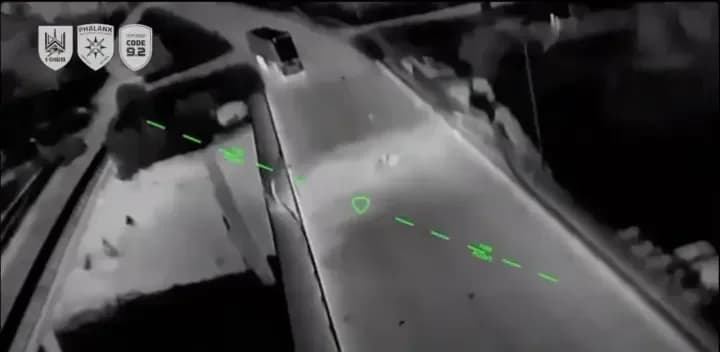
Ukraine’s recently established Phalanx Multi-Domain Operations Center has intensified efforts to disrupt Russian military logistics, particularly along the land corridor connecting occupied Crimea with Russia. Speaking to Radio Free Europe/Radio Liberty, Dmytro “Perun” Filatov, commander of the 1st Separate Assault Regiment named after Dmytro Kotsiubailo, said the unit combines cyber intelligence with long-range strike drones to target critical enemy infrastructure.
According to Filatov, the unit has created a dedicated cyber intelligence department that identifies high-value Russian military targets through cyber operations. Backed by independent funding, the center has also acquired Ukrainian-made Fire Point strike drones, allowing it to conduct precision attacks against Russian logistics and frontline support units.
“We focused specifically on work that would weaken the very units we are fighting on the ground. The goal of the multi-domain center is to destroy, at every level, the enemy formations we face. That is why the strikes near Chongar and Armyansk were aimed directly at the units operating against us, particularly the 37th and 64th Motor Rifle Brigades. We concentrate our intelligence assets on identifying their targets. At present, the most valuable source of information comes from cyber breaches. We created a cyber intelligence department dedicated to finding targets in cyberspace. We possess highly valuable information about the enemy. With the funding we received, we purchased Fire Point drones, which allowed us to respond effectively to Russian activities,” Filatov said.
He noted that while the first strikes were relatively limited, the unit rapidly improved its capabilities and now delivers significantly more effective attacks against Russian infrastructure and military facilities.
Filatov believes that blocking the R-280 highway, a key supply route linking Russia with occupied Crimea through southern Ukraine, is an achievable objective.
“I think it is 100% realistic. Robert Brovdi, Commander of the Unmanned Systems Forces, has already said so publicly. I believe they have enough resources and capabilities to achieve it if they are making such statements. As for the two assault regiments operating in our sector, we have the necessary means. I cannot say we could maintain such a blockade indefinitely with our current resources, but we have demonstrated that we are capable of striking these targets,” he said.
According to the commander, disrupting this corridor would isolate occupied parts of the Kherson and Zaporizhzhia regions, as well as Crimea, while forcing Russia to divert military reserves and resources.
“This would create not only military difficulties but also a humanitarian crisis in the occupied areas, which Russia would also have to address. The Russian authorities would be forced to deal with both military and civilian challenges, requiring additional resources. Sustaining such a blockade would also allow Ukrainian forces to advance more aggressively in the Zaporizhzhia direction, forcing Russia to redeploy reserves. That, in turn, would positively affect other sectors of the front,” Filatov added.
In recent weeks, Ukrainian forces have repeatedly targeted key transport infrastructure near Chongar, Armyansk, and the North Crimean Canal using domestically produced FP-2 and Behemoth drones, as part of a broader campaign to disrupt Russian supply routes to occupied Crimea.



Leave a comment