

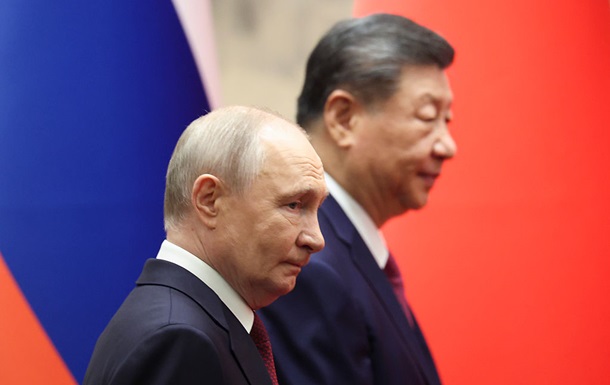
China is steadily expanding its political and economic influence over Russia while preparing not only for cooperation with President Vladimir Putin but also for a future transition of power. This was reported by The Wall Street Journal, citing officials from both countries and independent analysts.
Details
According to the report, Beijing is building relationships not only with Putin and his inner circle but also with members of Russia’s political and business elite who could shape the country’s future after a leadership change.
A source close to Russia’s security services told WSJ that authorities have increasingly detected cases of Chinese espionage and attempts to recruit mid-level Russian officials. Despite this, Moscow has been reluctant to raise the issue publicly for fear of damaging its strategic ties with Beijing.
China Gains More Leverage
Analysts say China has already secured a number of significant concessions from Russia while carefully avoiding any public display of dominance that could embarrass the Kremlin or Putin personally.
One example is Central Asia, a region traditionally regarded by Moscow as part of its sphere of influence. As Russia has become increasingly isolated internationally, China has steadily expanded its presence there.
According to WSJ, Beijing persuaded Moscow to support the use of the Chinese yuan as the primary currency of the Shanghai Cooperation Organization’s Development Bank, which is expected to finance projects across Central Asia.
At the same time, China has not helped Russia circumvent Western sanctions through international financial institutions. Moscow has remained excluded from the Asian Infrastructure Investment Bank and the BRICS New Development Bank.
Russia’s Growing Economic Dependence
Russia’s dependence on China has deepened significantly since the start of the full-scale invasion of Ukraine.
Russia now exports mainly oil, natural gas, and other raw materials to China, often at substantial discounts.
According to the report, China accounted for roughly 10% of Russia’s foreign trade in 2013, when Xi Jinping first met Putin as China’s leader. Today, that share has risen to around 40%.
By contrast, Russia represents less than 4% of China’s total foreign trade, highlighting the imbalance in the relationship.
“Power of Siberia 2” Still Unresolved
The proposed Power of Siberia 2 gas pipeline has become another example of China’s stronger negotiating position.
During a visit to China in 2025, Gazprom CEO Alexei Miller announced that a legally binding memorandum on the pipeline had been signed. However, Beijing never officially confirmed the agreement.
According to WSJ, China is willing to consider the project only if Russian gas is supplied at prices close to those charged on Russia’s domestic market.
Chinese officials reportedly also indicated that negotiations should not continue until Moscow accepts Beijing’s terms. Despite dozens of agreements signed during Putin’s visit, no documents related to Power of Siberia 2 were finalized.
Analysts believe China feels no urgency to proceed with the pipeline, as it has access to alternative energy supplies, including liquefied natural gas (LNG), allowing Beijing to negotiate from a position of strength.
Bilateral Trade Declines
Despite their close partnership, Russia-China trade declined for the first time since the start of the war, falling 6.5% in 2025 to 1.63 trillion yuan (approximately $234 billion).
Both Chinese exports to Russia (down 3.4%) and Russian exports to China (down 9.9%) recorded year-on-year declines.



Leave a comment