


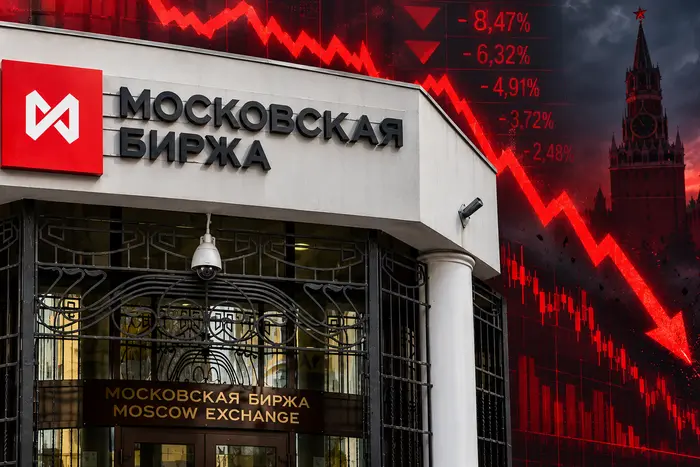
Attacks on Russia’s fuel and energy infrastructure, coupled with a growing federal budget deficit, have increased pressure on the country’s stock market.
During trading on July 16, the Moscow Exchange Index plunged 5.7%, falling below 2,000 points for the first time since October 2022, according to Glavkom, citing Finam and Interfax.
The sharp decline came amid intensified Ukrainian strikes on Russia’s fuel and energy sector and oil production facilities, as well as a rapidly expanding federal budget deficit.
The biggest losses were recorded by shares of VK after its applications—including the Max messenger and the VKontakte social network—were removed from Google Play for Android devices. Earlier, VK’s apps had also disappeared from Apple’s App Store without any official explanation.
Other major decliners included shares of Polyus, Surgutneftegas, Rusal, and AFK Sistema.
Gazprom shares fell to 83.98 rubles during the session, marking the company’s lowest share price on record. The previous low had been recorded on October 24, 2008, when the stock traded at 84 rubles.
The Moscow Exchange Index reached its 2026 peak on March 9, at 2,904.39 points. Since then, it has lost more than 31%, with the downturn continuing for a fifth consecutive month. The decline has coincided with increasingly effective Ukrainian drone strikes on oil refineries and other energy facilities, reducing Russia’s oil production and contributing to fuel shortages.
Pressure on the market has also been intensified by the deteriorating state of Russia’s federal budget. By the end of 2026, federal spending and the budget deficit are expected to exceed official projections by more than 1 trillion rubles (approximately $12.77 billion). Government expenditures are forecast to reach 45.11 trillion rubles, while revenues are expected to remain unchanged at 40.28 trillion rubles. As a result, the budget deficit could increase from the planned 3.79 trillion to 4.83 trillion rubles.
Earlier reports also indicated that Russia’s actual inflation rate had exceeded official expectations.







Leave a comment