


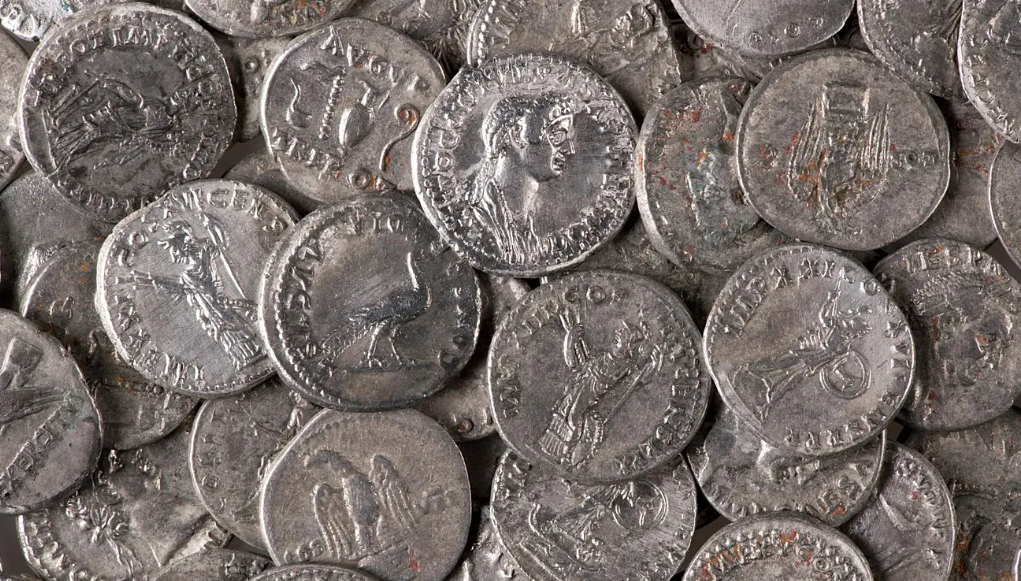
A father from the Rhineland set out in autumn 2025 to briefly scan a field near Wesseling, south of Cologne, with his metal detector. The device beeped and he uncovered a Roman silver coin, and then several more.
It was probably the find of his life. The amateur treasure hunter, a father from the Rhineland, had not been expecting anything special that day when his metal detector suddenly beeped. He uncovered a Roman silver coin, then more. By the time he had reached 15 and the detector was still sounding, he realised: “This was something much bigger.”
What archaeologists subsequently recovered exceeded all expectations: 934 Roman silver denarii with a total weight of 3,1 kilograms. The Rhineland Regional Authority (LVR) describes the discovery as the largest known hoard of coins from the reign of Emperor Hadrian on the territory of present-day Germany. Worldwide, there are thought to be only four larger Roman hoards from this period.
The site lies south of Cologne, in a region that played an important role during the Roman imperial era. The nearby Colonia Claudia Ara Agrippinensium, today’s Cologne, was then a major political, military and economic centre on the Rhine.
The time span of the coins is particularly fascinating. The oldest dates from 148 BC, in the era of the Roman Republic. The most recent was struck in AD 124/125. More than 270 years separate the two. When the hoard was probably buried in the second quarter of the 2nd century, the oldest coin was already more than two and a half centuries old, yet apparently still valid as a means of payment. The find therefore also shows how long older coins could remain in circulation in the Roman monetary system.








Leave a comment