


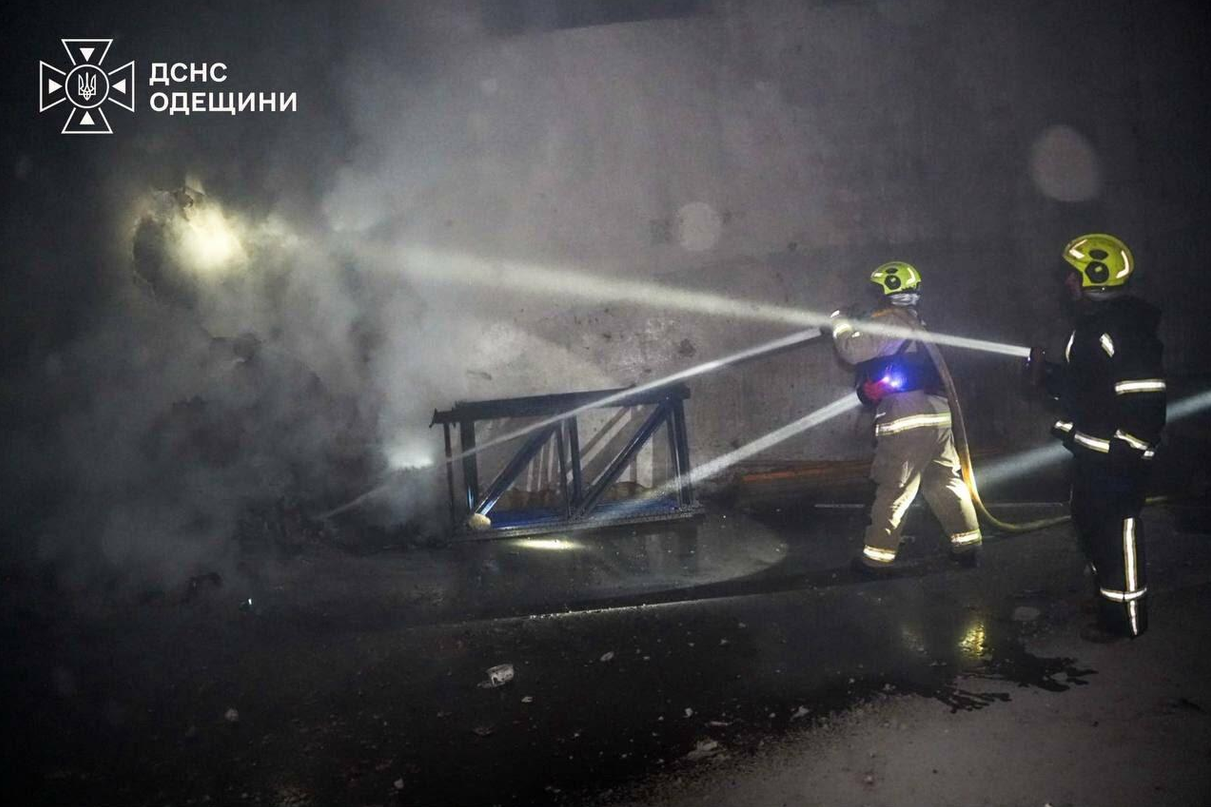
Russia’s strike on a civilian vessel flying the flag of Palau in the Odesa region is not simply another attack on Ukrainian port infrastructure. It is a signal that must be heard far beyond Ukraine.
This was a vessel flying the flag of another sovereign state, operating in the Ukrainian port region. When Russia attacks civilian shipping, the danger extends beyond Ukrainian sailors and ports. It creates a direct risk for international commercial navigation and, consequently, for European vessels and crews operating in the Black Sea.
If attacks on civilian ships continue without a sufficiently clear response, Moscow receives a dangerous signal: that the risks of attacking international shipping remain acceptable.
Europe therefore needs to move beyond expressions of concern and toward a credible policy of deterrence.
A symmetrical response is needed — not to escalate the war or widen the conflict, but to make one principle unmistakably clear: attacks on civilian international shipping must have consequences.
This is fundamentally about protection. European states should strengthen the protection of maritime routes, intelligence sharing, monitoring and, where appropriate, the escort of commercial vessels. They must also be prepared to take proportionate measures in response to further attacks.
The Black Sea cannot become a space where a civilian vessel flying the flag of any country can be treated as an acceptable target. Freedom of navigation is not an abstract principle. It concerns the lives of crews, international trade and the security of Europe as a whole.
A strong and predictable response is not a path toward war. On the contrary, credible deterrence can reduce the likelihood of further attacks by making clear that targeting international civilian shipping will carry consequences.
Europe must protect its ships before another attack makes the cost of inaction even higher.







Leave a comment