


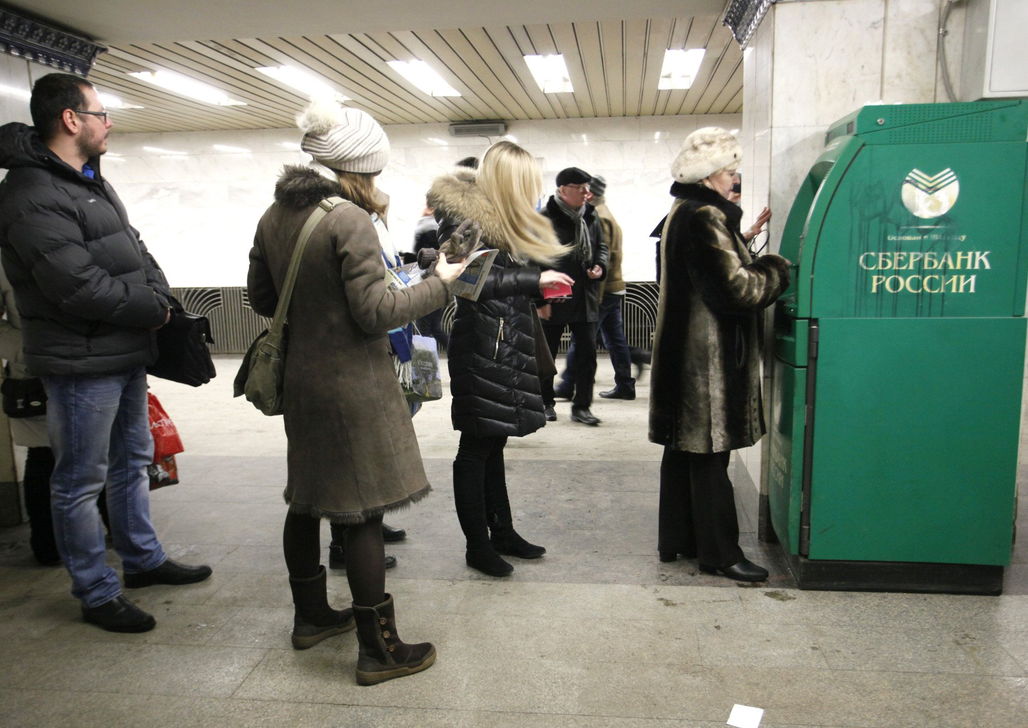
Russians have been moving money out of bank deposits and into cash for eight consecutive months. In September alone, households withdrew another 386.3 billion rubles from Russian banks. This is no longer a one-off shift in financial behavior.
The key issue is not just the size of the September withdrawal, but the persistence of the trend. Month after month, Russians are reducing the amount of money they keep in deposits and choosing to hold more cash instead. This can reflect concerns about economic uncertainty, interest rates, financial risks and a desire to maintain direct control over their savings.
For Russian banks, this creates additional pressure. Household deposits are an important source of funding for lending. When money leaves the banking system, banks have to operate with a less stable funding base — particularly difficult in an economy already facing sanctions, high interest rates and massive government spending.
There is another important signal here. Household behavior can reveal economic sentiment faster than official statements. The government may continue to emphasize economic stability, but people make their own assessment with their money.
When hundreds of billions of rubles are repeatedly moved out of deposits and into cash, it suggests that many households prefer liquidity and direct access to their savings over leaving those funds inside the banking system.
The September figure — 386.3 billion rubles — represents a huge amount of liquidity leaving deposits in just one month. And when the same pattern continues for eight months, it becomes increasingly difficult to dismiss it as a seasonal fluctuation.
For Moscow, this creates another challenge: maintaining economic confidence is not simply about publishing favorable statistics. It also means convincing citizens that keeping their savings in banks is safe and worthwhile.
So far, the behavior of households points in another direction.
Money is leaving Russian banks. And the longer this trend continues, the harder it becomes to explain it as merely a temporary change in consumer behavior.








Leave a comment